
Product Profile

Zymogesic is a combination of two proteolytic enzymes Trypsin and Bromelain with antioxidant Rutoside. This combination has antioxidant, anti-inflammatory, antioedematous, analgesic, antithrombotic, antiplatelet, antiophlogistic, immunomodulator, fibrinolytic properties.

A positive effect of Trypsin-Bromelain-Rutoside combination was recorded in disseminated sclerosis: terms of remission and normalization of the balance between proliferation and apopthosis were prolonged.
The positive dynamics of lymphoproliferative syndrome as well as diminishing of respiratory infection frequency was noted with Trypsin-Bromelain-Rutoside combination35.
Dosage:
| Adults | Zymogesic: Daily 2 Tab T.I.D. orally, unchewed, with plenty of liquid, 30 minutes before meal or at least 2 hours after meal.
Zymogesic DS: Daily 1 tab T.I.D. orally, unchewed, with plenty of liquid, 30 minutes before meal or at least 2hours after meal. |
| Children | Zymogesic: (6 years and above) 1 tablet/10 kg body weight/ day up to maximum six tablets a day. Total recommended dose is administered in 2-3 divided doses. |
Adverse Effect
Zymogesic usually well tolerated. Harmless alteration in the consistency, color and odor of stool may occur. A sensation of fullness, flatulence, and occasional episodes of nausea are possible during high-dosage administration. They can be avoided by symptoms persist doctor should be consulted allergic reactions (skin rash) occur rarely and disappear after discontinuation of the drug. In case of their occurrence discontinue using Zymogesic and doctor should be consulted.
Drug Interaction
No clinical trials have been conducted to evaluate the drug interaction of Zymogesic. However, no evidence of incompatibility of Zymogesic with other simultaneously administered drug has been reported.
Contraindication
Zymogesic must not be used in case of known hypersensitivity to its active or inactive ingredients. The preparation must not be used by patients with severe inborn or gained coagulation disorders. (e.g. hemophilia, severe liver damage, dialyzed patients).
Special Population
Children: Recommended dose is 1 tablet/10 kg body weight / day. Total recommended dose is administered in 2-3 divided doses. Therefore the minimum weight of the patient should be 20 kg, which corresponds to approximately 6 years.
Pregnancy & lactation: Administration of Zymogesic during pregnancy and breast feeding not recommended.
TRYPSIN
Trypsin is a proteolytic enzyme having the property to reduce edema of the soft tissues and to reverse inflammation4.
Mechanism of action
The possible mechanism of this enzyme (Trypsin), on administration, attracted to the inflammatory site is to enhance the proteolysis of blood clot, necrotic tissue, purulent exudates, thereby restoring circulation to the area. It does not act on living tissues4,5.
Trypsin reduces the inflammatory cytokines like C-reactive protein (CRP), TNF-α, IL-6 and IL-1β6,7,8.
Pharmacokinetics8,9
Absorption: Trypsin gets absorbed in the upper intestinal tract. It is bound to antiproteinases.
Half Life: Serum half life of trypsin varies from 17.5-24 minutes.
Distribution: Between 13% & 38% of the radiolabelled human trypsin recovered from duodenal juice aspirated continuously over 300 minutes. After radiolabelled trypsin infusion, 11% of the total dose was found to be present in the circulation after 75 minutes.
BROMELAIN
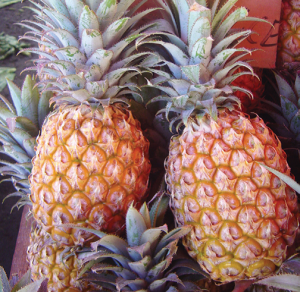
Bromelain is a sulfhydryl-containing proteolytic enzyme obtained from Ananas comosus, the pineapple plant.
Bromelain’s primary constituent is a sulfhydryl proteolytic fraction. Bromelain also contains peroxidase, acid phosphatase, several protease inhibitors, and organically-bound calcium10.
Mechanism of action
Bromelain has been shown to have a number of beneficial properties such as anti-inflammatory, and analgesic actions, and anti-oedematous, anti-thrombotic, fibrinolytic effects.
Evidence suggests that Bromelain’s action as an antiinflammatory is mediated by:
(i) Increasing serum fibrinolytic activity, reducing plasma fibrinogen levels and decreasing bradykinin levels (which results in reduced vascular permeability) and hence reducing oedema and pain.
(ii) Mediating prostaglandin levels (by decreasing levels of PGE2 and thromboxane A2)
(iii) Modulation of certain immune cell surface adhesion molecules, which play a role in the pathogenesis of arthritis10,11,12.
Pharmacokinetics
Bromelain is absorbed intact through the gastrointestinal tract. About 40% is absorbed from the intestine. The highest concentration of bromelain is found in the blood one hour after administration10.
 RUTOSIDE
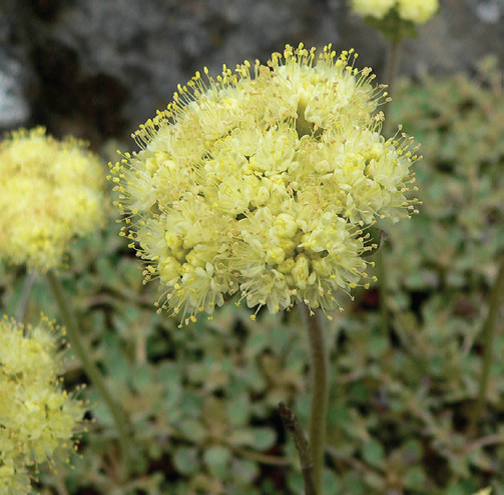
Rutoside is a citrus flavonoid glycoside and it is also known as rutin, hesperidins or vitamin P. It is obtained from Buckwheat plant
Mechanism of action
• Rutoside has antioxidant, anti-oedematous activity13,14.
• Rutoside reduce the production of inflammatory cytokines like tumor necrosis factor-alpha (TNF-α), interleukin (IL)-1β and interleukin (IL)-6 and may have antiinflammatory activity8,15.
• Rutoside is a flavonoid compound which inhibits hyaluronidase in connective tissues, the blockage of ATPases, phospholipases, cyclo-oxygenases and lipo-oxygenases, thus providing an edema– protective effect8.
• It may be beneficial in reducing chronic venous insufficiency symptoms like heavy legs, edema, paresthesia and cramps16.
 Pharmacokinetics8,17
Absorption: Rutoside gets absorbed in the upper intestinal tract. It is bound to antiproteinases.
Metabolism: There are four metabolites of Rutoside i.e. DHT, mPHAA, DHPAA, and HVA. Blood levels of these four metabolites increase at 4 to 8 hr after the oral administration of Rutoside. At 8 to 12 hrs post-administration, blood levels reach a maximum level which was 2 to 3 fold the time 0 (baseline) levels. Blood levels decrease gradually afterwards and return to the original level at 20 to 35 hrs. The half life of these four metabolites is approximately 11 hrs.
Excretion: Total urinary excretion of metabolites was 50.5% of the dose in 48 hrs.
CLINICAL EVIDENCE FOR TRYPSIN-BROMELAIN-RUTOSIDE COMBINATION (ZYMOGESIC)
Post Traumatic and Postoperative Swelling
As per study published in ‘Acta Chirurgiae Orthopaedicae et Traumatologiae Cechoslovaca’ Kamenícek V et al compared the effect of Trypsin-Bromelain-Rutoside combination and standard antioedematic drugs in the treatment and prevention of post-traumatic and postoperative swelling.
60 patients were recruited with mean age group 42 years (range, 12-79 years). 30 patients were treated with Trypsin- Bromelain-Rutoside combination (started with 3 tablets 3 times a day for first three days after operation then 2 tablets 3 times a day thereafter) and other 30 patients with standard antioedematic drugs.
At the end of the first postoperative week the volume of operated limb was reduced by 12% in Trypsin-Bromelain- Rutoside combination treated patients as compared to 1.45% in standard antioedematic drugs treated patients and at the end of follow up on 14th postoperative day the volume was reduced by almost 17% in Trypsin-Bromelain-Rutoside combination treated patients as compared to 9% in standard antioedematic drugs treated patients. Trypsin-Bromelain- Rutoside combination was very well tolerated by patients.

CLINICAL EVIDENCE FOR TRYPSIN-BROMELAIN-RUTOSIDE COMBINATION (ZYMOGESIC)
Post Traumatic and Postoperative Swelling
As per study published in ‘Acta Chirurgiae Orthopaedicae et Traumatologiae Cechoslovaca’ Kamenícek V et al compared the effect of Trypsin-Bromelain-Rutoside combination and standard antioedematic drugs in the treatment and prevention of post-traumatic and postoperative swelling.
60 patients were recruited with mean age group 42 years (range, 12-79 years). 30 patients were treated with Trypsin- Bromelain-Rutoside combination (started with 3 tablets 3 times a day for first three days after operation then 2 tablets 3 times a day thereafter) and other 30 patients with standard antioedematic drugs.
At the end of the first postoperative week the volume of operated limb was reduced by 12% in Trypsin-Bromelain- Rutoside combination treated patients as compared to 1.45% in standard antioedematic drugs treated patients and at the end of follow up on 14th postoperative day the volume was reduced by almost 17% in Trypsin-Bromelain-Rutoside combination treated patients as compared to 9% in standard antioedematic drugs treated patients. Trypsin-Bromelain- Rutoside combination was very well tolerated by patients.
The results of the study proved a clearly positive effect of Trypsin-Bromelain-Rutoside combination on the reduction of oedema accompanying the trauma and inflammation. The results of the study proved a statistical significance of the acceleration of the reduction of oedema in patients treated by Trypsin-Bromelain-Rutoside combination as compared to the patients treated by a standard antioedematous drugs.
It was concluded that Trypsin-Bromelain-Rutoside treatment efficient in oedema reduction and thus accelerated healing, antiophlogistic and analgesic effect18.
Lower limb Postphlebitic syndrome
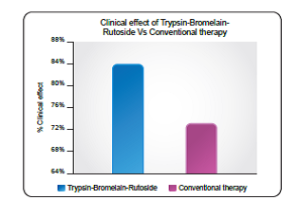
Koshkin VM et al compared the effect of Trypsin-Bromelain-Rutoside combination (2 tablets t.i.d. for 3 months) and conventional combined therapy in 66 patients with lower limb postphlebitic syndrome.
The clinical effect of Trypsin-Bromelain-Rutoside therapy was more pronounced (84% Trypsin-Bromelain-Rutoside Vs 73% for conventional therapy). Better outcome was provided by significant changes in hemostasis and blood rheological parameters, especially by increased blood fibrinolytic activity and inhibited platelet function. These resulted in facilitation of venous outflow from affected extremity and clinical regression of chronic venous insufficiency20.
Hematoma
In a double-blind, placebo controlled, randomised study in 46 subjects with an artificially produced hematoma, efficacy and tolerability of Trypsin-Bromelain-Rutoside combination was investigated.
Study medication (2 tablets of Trypsin-Bromelain-Rutoside combination or placebo t.i.d.) was given over 10 days.
Significant improvement in tenderness and hematoma remission was seen with Trypsin-Bromelain-Rutoside combination (p < 0.0001).
No adverse events were observed in either group.
Along with its very good tolerability the investigated enzyme preparation accelerates the reduction of tenderness and hematoma remission in the hematoma induced subjects.
It was concluded that Trypsin-Bromelain-Rutoside combination is an effective therapeutic agent for injuries resulting in pain and hematoma. Apart from this the excellent tolerability is an essential advantage compared with NSAIDs which cause substantial side effects19.
Thrombophlebitis and Postthrombophlebitic syndrome
Kopadze et al evaluated the effect of Trypsin-Bromelain-Rutoside combination in 83 patients who had disease of venous system, including acute thrombophlebitis and postthrombophlebitic syndrome.
Trypsin-Bromelain-Rutoside therapy resulted in decrease of pain, edema, throphic ulcers and improvement of microcirculation of the injured site.
It was conclude that, Trypsin-Bromelain-Rutoside combination, as medical means with high efficacy and practical absence of adverse reactions, must be widely used in the complex treatment of vascular and traumatic disorders21.
Tendinitis
Szczurko O et al evaluated the effect of Trypsin-Bromelain-Rutoside combination in patients with tendonitis.
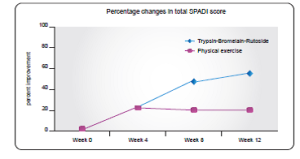
85 Canadian postal workers with rotator cuff tendinitis for a duration of >6 weeks were randomized to receive Trypsin- Bromelain-Rutoside combination (2 tablets 3 times / day) along with dietary counseling and acupuncture (n = 43) or placebo along with standardized physical exercises (n = 42) for 12 weeks.
The primary outcome measure was the Shoulder Pain and Disability Index (SPADI), and secondary outcomes were the pain visual analog scale (VAS), Short Form 36 (SF-36), Measure Yourself Medical Outcomes Profile (MYMOP), and shoulder maximal range of motion.
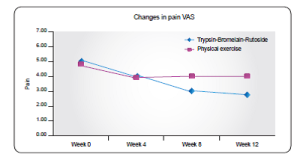
SPADI scores decreased by 54.5% (P < 0.0001) in the Trypsin-Bromelain-Rutoside combination treated patients as compared to 18% (P = 0.0241) decreased in patients treated with standardized physical exercises. Significant differences between groups were also observed in the pain VAS, MYMOP, SF-36, and shoulder extension, flexion, and abduction, with the Trypsin-Bromelain-Rutoside combination group showing superiority in each outcome. No serious adverse reactions were observed. It was concluded that Trypsin-Bromelain-Rutoside combination provided greater improvement in shoulder function as compared with standardized exercises in patients suffering from tendinitis. Statistically significant improvements in quality of life measures were also observed in the Trypsin-Bromelain-Rutoside combination group as compared with standardized exercises group22. Rheumatic diseases
Wittenborg A et al conducted comparative epidemiological study to evaluate the safety and efficacy of Trypsin-Bromelain- Rutoside combination and NSAID in patients with rheumatic diseases.
Data of 3326 patients treated for rheumatic diseases between January 1993 and the end of March 1995 were registered by 380 physicians. The patients received Trypsin-Bromelain-Rutoside combination 6 tablets/day for 23 to 35 days or NSAID for 16 to 25 days.
In Trypsin-Bromelain-Rutoside combination treated patients 50% higher success rate can be expected than in NSAID treated patients.
The results of the study demonstrated that treatment success rate with Trypsin-Bromelain-Rutoside combination is higher in comparison to NSAID. Moreover Trypsin-Bromelain-Rutoside combination was well tolerated showing much less adverse events when compared with conventional doses of NSAID23.
Osteoarthritis
Osteoarthrosis of knee joint (Trypsin-Bromelain-Rutoside combination Vs NSAID)
Tilwe GH et al compared the efficacy and tolerability of Trypsin-Bromelain-Rutoside combination with that of an NSAID (diclofenac) in 50 patients (age 40-75 years) with activated osteoarthrosis of knee joint.
*Study centre: GS Medical College and KEM Hospital, Mumbai.
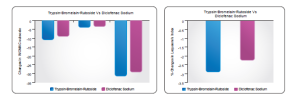
They were randomized to receive Trypsin-Bromelain-Rutoside combination tablets (3 tablets b.i.d. for 1 week then 2 tablets b.i.d. thereafter) or diclofenac sodium 50 mg bid for three weeks.
At the end of therapy (three weeks) and at follow-up visit at seven weeks there was reduction in pain and joint tenderness and swelling in both groups, and slight improvement in the range of movement in the study group. The reduction in joint tenderness was greater (p < 0.05) in the study group receiving Trypsin-Bromelain-Rutoside combination.
It was concluded that Trypsin-Bromelain-Rutoside combination is as efficacious and well tolerated as diclofenac sodium in the management of active osteoarthrosis over three weeks of treatment24.
Osteoarthritis of the hip (Trypsin-Bromelain-Rutoside combination Vs NSAID)
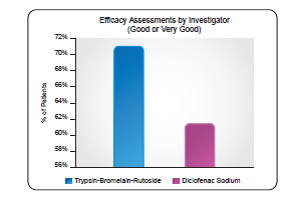
In double blind, randomised phase III comparative study 90 patients with osteoarthritis of the hip were treated with Trypsin-Bromelain-Rutoside combination (two tablets t.i.d.) or Diclofenac (50 mg b.i.d.) for 6 weeks.
Trypsin-Bromelain-Rutoside combination was simultaneously non-inferior as compared to Diclofenac Sodium with regard to the 4 single endpoints: WOMAC subscale pain, joint stiffness, physical function and Lequesne’s index.
It may well be recommended for the treatment of patients with osteoarthritis of the hip with signs of inflammation as indicated by a high pain level25.
Reactive Arthritis
Trypsin-Bromelain-Rutoside combination was studies in 28 patients of the genitourinary variant of chlamydial reactive arthritis. 17 patients (group 1) were received antibacterial, NSAIDs and Trypsin-Bromelain-Rutoside combination, while 11 patients (group 2) were received antibiotics and NSAIDs. The results showed that complex therapy with Trypsin- Bromelain-Rutoside combination showed faster relief of manifestations of joint lesion syndrome, decreased in laboratory evidence of disease activity and normalization of interferon profile. The effect of antibacterial drugs was improved and chlamydia elimination was more effective26.
Sepsis
In double blind, randomized, controlled phase III study Shahid et al evaluated the efficacy and safety of Trypsin- Bromelain-Rutoside combination in treatment of sepsis in children.
*Study centre: LTMMC and LTMG Hospital and Medical College, Mumbai
60 eligible children aged 1 month to 12 years with sepsis were randomised to receive either Trypsin-Bromelain-Rutoside combination (n=30) or placebo (n=30) tablets (1 tablet/10 kg body weight up to maximum six tablets a day in two or three divided doses for 14-21 days).
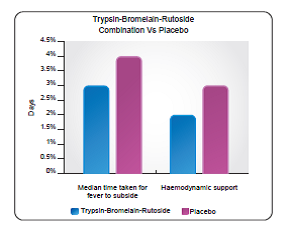
Median time taken for fever to subside was three days in the Trypsin-Bromelain-Rutoside combination group Vs. four days in the placebo group (p < 0.05); haemodynamic support was needed for two days in the Trypsin-Bromelain- Rutoside combination group but three days in the placebo group (p < 0.05). It was concluded that Trypsin-Bromelain-Rutoside combination is effective as an adjuvant with antibiotics and supportive treatment for early improvement of pediatric patients with sepsis27. Recurrent infections of respiratory tract (Laryngitis)
As per study published in ‘Vox Pediatriae’ 6 month therapy of Trypsin-Bromelain-Rutoside combination (for adults: 2 tablets t.i.d. and for children 1tablet/10kg.
body weight) suppressed laryngeal dyspnea and lowered sickness rate in patients with recurrent laryngitis through its immunoregulatory effect.
Trypsin-Bromelain-Rutoside therapy resulted in reduction of both frequency and severity of diseases. Associated prescription of antibiotics was also significantly reduced28.
Laryngeal cancer
Clinical effect of Trypsin-Bromelain-Rutoside combination on radiation-induced epitheliitis was studied in patients with laryngeal cancer. 15 patients were treated by radiation with administration of Trypsin-Bromelain-Rutoside combination (2 tablets t.i.d.) for 10 days and 15 patients without Trypsin-Bromelain-Rutoside combination served as a control group.
The blood leukocyte count was 5 x 10⁹ / l in Trypsin-Bromelain-Rutoside combination, while in the control group it was 3 x 10⁹ / l. The symptoms of epitheliitis disappeared within one week after combination treatment. Administration of Trypsin-Bromelain-Rutoside therapy alleviated the consequences of radiation-induced epitheliitis. Trypsin-Bromelain- Rutoside combination was well tolerated without any side effects29.
In Nasal Surgery (Septoplasty)
Lukas J et al evaluated the effect of Trypsin-Bromelain-Rutoside combination in Septoplasty. The 20 patients with average age 32 were recruited in the study. The evaluation of the combination treatment was positive. In all patients the postoperative oedema was significantly decreased which was evaluated by clinical and statistical methods. There was no significant bleeding in any patient during per- and post-operative period. The Trypsin-Bromelain-Rutoside therapy was well tolerated by all patients30.
Secretory Otitis
Vyhnankova L et al evaluated the effect of Trypsin-Bromelain-Rutoside combination in the complex treatment of secretory otitis. Trypsin-Bromelain-Rutoside is a combined enzyme preparation with antiedematous, antiphlogistic, fibrinolytic and immunomodulatory effects.
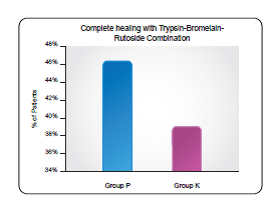
34 patients with age 4-18 years were treated with Trypsin-Bromelain-Rutoside with usual treatment for 3 months (group P). Control group (group K) received the usual treatment only.
Tympanometric curve B changed into type A in 49 % of P group patients in comparison with 39 % of the group K. Complete healing was observed in 46 % of the group P patients compared to 39 % patients of the group K.
In the group P, 75 % of children occurred evident decrease of morbidity as compared with 13 % in the group K. The
tolerance of Trypsin-Bromelain-Rutoside combination was very good.
Thus, Trypsin-Bromelain-Rutoside combination can be a suitable part of secretory otitis treatment improving its efficiency31.
Acute and Chronic anterior Uveitis
Porubska M evaluated the effect of 8 week Trypsin-Bromelain-Rutoside combination treatment in 29 hospitalized patients with acute and chronic anterior uveitis.
In a group of patients with anterior acute uveitis mostly associated with ankylosing spondylitis, inflammatory cells from the eye anterior chamber in patients treated with Trypsin-Bromelain-Rutoside combination got absorbed on average in 20 days compared to 27 days in the control group.
In the patients with chronic anterior uveitis mostly associated with juvenile chronic arthritis (JCA) all the inflammatory cells in 60 % of the patients treated with Trypsin-Bromelain-Rutoside combination they got absorbed on average in 17.3 days with the most persisting effect and in the control group in 37 % of the patients on average in 30 days. In Trypsin- Bromelain-Rutoside group fibrin and tyndal got absorbed in 1 day Vs 4-5 days in the control group.
The results suggest that, utilization of hydrolytic enzymes makes possible to lower the dosage of corticoids and contributes to shorter time needed for inhibition of the uveitis inflammatory activity, important especially in children with JCA32.
Viral Hepatitis
In an open, randomized, clinical pilot trial, four groups with 20 hepatitis C patients each were treated with either ‘liver support’ therapy, with established medications ribavirin, α-interferon and with Trypsin-Bromelain-Rutoside combination.
The liver transaminases, aspartate aminotransferase (AST), alanine aminotransferase (ALT), and Serum Gamma- Glutamyl Transferase (SγGT) markedly improved over the period of three months in the three drug groups, but only marginally in the liver support group. The best results were found with Trypsin-Bromelain-Rutoside, which was even superior to ribavirin and α-interferon.
The tolerance of the Trypsin-Bromelain-Rutoside was excellent33.
Multiple Sclerosis
As per study published in ‘Likars’ka sprava’ Trypsin-Bromelain-Rutoside combination treatment for one to three years resulted in decline in the incidence of complications, progression of illness in 74 patients with remitting, remitting-progressive, and secondary progressive course of multiple sclerosis. Trypsin-Bromelain-Rutoside combination was reported as a safe agent in the treatment of multiple sclerosis34.
Disseminated Sclerosis and Lymphoproliferative syndrome
Efficiency of Trypsin-Bromelain-Rutoside combination was estimated in patients with disseminated sclerosis, in children with generalized lymphodenopathy (age 3-12 years).